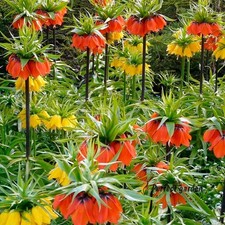
The fritillary is a striking spring-flowering plant admired for its unusual, bell-shaped blooms and distinctive chequered or spotted petals. Belonging to the lily family, fritillaries grow in woodlands, meadows, and grasslands across Europe, Asia, and North America. One of the best-known species is the snake’s head fritillary, whose purple and white flowers display a unique checkerboard pattern that has fascinated gardeners and nature lovers for centuries. Although delicate in appearance, the fritillary is a hardy perennial that returns each spring, making it a symbol of renewal and the changing seasons.
In pagan traditions, the fritillary is often associated with the arrival of spring, rebirth, and the awakening of the natural world. As it blooms during the season when daylight grows longer, it represents the return of life after winter and the balance between light and darkness. Some modern pagans include fritillaries in seasonal celebrations such as Beltane or Ostara, using the flowers to decorate altars or sacred spaces as a reminder of nature’s endless cycle of growth, death, and renewal.
Within modern witchcraft, the fritillary is valued more for its symbolic qualities than for practical magical use. Its intricate patterned petals are sometimes seen as representing mystery, hidden knowledge, and the interconnectedness of all living things. Practitioners may meditate on the flower to encourage patience, personal transformation, and trust in the natural rhythms of life. The nodding shape of the blossoms is also thought by some to symbolize humility, wisdom, and respect for the unseen forces of nature.
Because several fritillary species are protected in the wild, ethical practitioners encourage growing them in gardens or obtaining cultivated plants rather than picking wild flowers. Respecting the environment is considered an important part of many pagan and magical paths, reflecting the belief that all living things deserve care and protection.
Today, the fritillary continues to inspire people through its unusual beauty and quiet symbolism. Whether appreciated as a wildflower, a garden plant, or a spiritual emblem, it serves as a gentle reminder of resilience, transformation, and the enduring power of nature’s seasonal cycles.