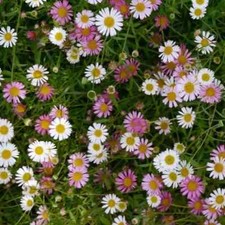
Fleabane is a hardy wildflower belonging to the daisy family, known for its small, delicate blossoms with thin petals that are usually white, pink, or pale purple surrounding a bright yellow center. Found growing in meadows, roadsides, and open fields across Europe and North America, fleabane has long been valued in traditional herbal practices and folklore. Its common name comes from the old belief that dried bundles of the plant could repel fleas and other unwanted insects when hung indoors or scattered on floors.
In pagan traditions, fleabane is often associated with cleansing, protection, and renewal. Because it grows easily in disturbed ground and flourishes in challenging conditions, it symbolizes resilience, perseverance, and the ability to overcome hardship. Many modern Pagans view the plant as a reminder that strength and beauty can emerge even in difficult circumstances. It is sometimes included in seasonal celebrations that honor the changing cycles of nature, particularly during spring and early summer when the plant is in bloom.
In witchcraft, fleabane is considered a protective herb. Practitioners may place it in charm bags, hang dried sprigs above doorways, or keep it near windows to symbolically guard a home against negative influences. It is also believed to support spiritual cleansing by helping clear away unwanted energy and encouraging a fresh start. Some witches burn dried fleabane as part of purification rituals, although care should always be taken when burning any dried plant material.
Fleabane is also linked with healing and personal growth. Its ability to spread naturally across the landscape has made it a symbol of adaptability and quiet endurance. During meditation or spellwork, it may be used to encourage emotional balance, confidence, and the release of lingering fears or worries.
While there is little historical evidence that fleabane possesses supernatural powers, its long history in folklore has earned it an enduring place in modern pagan and magical practices. Today, it is appreciated not only for its cheerful flowers but also for the symbolic meanings of protection, cleansing, resilience, and transformation that many practitioners continue to associate with this unassuming wild plant.