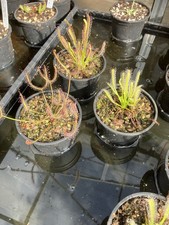
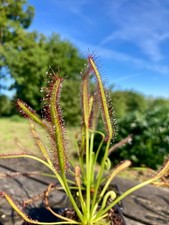
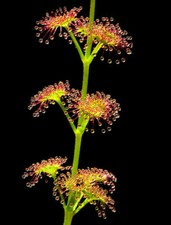
Drosera, commonly known as sundew, is a fascinating group of carnivorous plants found across Europe, North America, Australia, Asia, and Africa. Named after the Greek word drosos, meaning “dew,” these plants are instantly recognizable by their tiny, glistening droplets that sparkle like morning dew. In reality, these droplets are a sticky substance that traps insects. Once an insect lands on the leaves, it becomes stuck, allowing the plant to slowly curl around its prey and digest it. This unique adaptation helps Drosera survive in nutrient-poor soils, such as bogs and wetlands, where other plants struggle to thrive.
Because of its unusual appearance and remarkable hunting ability, Drosera has long captured the imagination of herbalists, mystics, and practitioners of nature-based spiritual traditions. In modern paganism and witchcraft, sundew is often viewed as a symbol of attraction, enchantment, patience, and hidden power. Its glittering leaves are said to represent the magical ability to draw opportunities, love, prosperity, or spiritual wisdom toward oneself without force.
Some practitioners include dried sundew in charm bags, spell jars, or altar displays intended to enhance personal magnetism or strengthen intentions involving attraction and manifestation. Others associate the plant with the element of Water because of its dew-like appearance, although some traditions also connect it to Venus due to its links with beauty, love, and allure. These associations vary widely between different pagan paths and are based on modern magical symbolism rather than historical evidence.
Historically, Drosera was valued in European folk medicine, where extracts were used to treat coughs and respiratory ailments. While these medicinal uses have a long tradition, the plant should never be consumed without proper guidance, as some species are protected, and misuse may pose health risks.
Today, Drosera remains one of nature’s most extraordinary plants. It reminds both botanists and spiritual practitioners that appearances can be deceptive—a delicate-looking plant can possess remarkable strength and adaptability. Whether admired for its ingenious method of catching insects or appreciated as a symbol of attraction and quiet resilience, sundew continues to inspire curiosity, respect, and a sense of natural wonder.






![ROUND-LEAVED SUNDEW - [Drosera rotundifolia] - dried herb - 250g](https://i.ebayimg.com/images/g/whoAAOSwvL9jnKX0/s-l225.jpg)
![ROUND-LEAVED SUNDEW - [Drosera rotundifolia] - dried herb - 1000g](https://i.ebayimg.com/images/g/xKQAAOSwtnljnKal/s-l225.jpg)