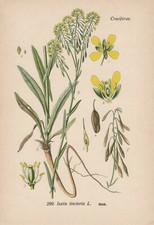
Dyer’s Woad (Isatis tinctoria) is a hardy flowering plant best known for producing a rich blue dye that has been valued for thousands of years. Native to parts of Europe and Asia, it grows tall with clusters of small yellow flowers and long, bluish-green leaves. Before the arrival of imported indigo, woad was one of Europe’s most important dye plants, used to colour fabrics in shades ranging from pale sky blue to deep navy. It has a long history in traditional crafts, medicine, and folklore.
In pagan traditions, Dyer’s Woad is often associated with transformation, wisdom, and spiritual strength. The remarkable process of turning its green leaves into vivid blue dye reflects themes of change, hidden potential, and personal growth. The colour blue has long symbolised the sky, water, intuition, and the spiritual realm, making woad a meaningful plant for rituals centred on inner vision, truth, and communication.
Modern witches and practitioners of nature-based spirituality sometimes include Dyer’s Woad in spells and rituals for protection, courage, and self-discovery. The plant’s historical reputation as a source of blue body paint—particularly its popular association with the ancient Celtic tribes of Britain—has linked it with bravery and resilience. While historians debate whether Celtic warriors commonly painted themselves with woad before battle, the image has become a powerful symbol in modern folklore and magical practice.
Some practitioners use dried leaves in charm bags or place the plant on altars dedicated to transformation, creativity, or ancestral connections. Woad-dyed cloth may also be used in ritual garments, altar coverings, or spell work involving healing, truth, or spiritual journeys. As with many magical herbs, its symbolism often depends more on personal intention and tradition than on historical certainty.
Although Dyer’s Woad has a respected place in modern paganism and witchcraft, much of its magical lore has developed through contemporary practice rather than surviving ancient records. Even so, its enduring connection to the colour blue, its remarkable dyeing properties, and its rich cultural history continue to inspire those who seek a deeper relationship with the natural world. Today, Dyer’s Woad remains a symbol of transformation, resilience, and the hidden magic found within ordinary plants.