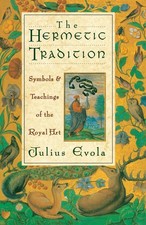
The Hermetic Tradition: Symbols and Teachings of the Royal Art is one of Julius Evola’s most influential and intellectually demanding works. Originally published in 1931, the book explores the principles, symbols, and spiritual teachings of Hermeticism, an esoteric tradition rooted in ancient Egyptian, Greek, and Renaissance thought. Evola presents Hermeticism not merely as a historical or philosophical system but as a practical path toward inner transformation and spiritual realization.
The central theme of the book is the interpretation of alchemy as a symbolic and initiatory discipline rather than an attempt to transform base metals into gold. Evola argues that alchemical texts conceal profound spiritual teachings concerning the purification, regeneration, and elevation of human consciousness. Through detailed analyses of alchemical symbols such as mercury, sulfur, gold, and the philosopher’s stone, he reveals their significance as stages in a process of self-mastery and transcendence.
One of the book’s greatest strengths is its depth of scholarship. Evola draws upon a wide range of sources, including Hermetic writings, medieval alchemical treatises, and mystical traditions from both East and West. His interpretations are often original and thought-provoking, encouraging readers to view ancient symbols as expressions of universal spiritual truths. The work also challenges modern materialistic perspectives by emphasizing the possibility of higher states of being and knowledge.
However, the book is not easy reading. Evola’s writing style is dense, highly theoretical, and assumes some familiarity with esoteric philosophy. Readers seeking a straightforward introduction to Hermeticism may find the text difficult to follow. Furthermore, some of Evola’s conclusions are speculative and reflect his personal philosophical outlook, which may not appeal to all audiences.
Despite these challenges, The Hermetic Tradition remains a significant contribution to the study of Western esotericism. It offers a profound exploration of alchemical symbolism and the quest for spiritual transformation. For serious students of Hermetic philosophy, mysticism, and occult traditions, the book provides valuable insights and a rich intellectual experience. Its enduring relevance lies in its invitation to look beyond literal interpretations and discover the deeper meanings hidden within ancient wisdom traditions.