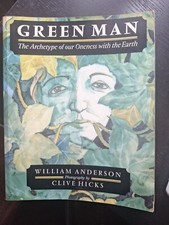
William Anderson’s Green Man: The Archetype of Our Oneness with the Earth is a fascinating exploration of one of the most enduring symbols in mythology, folklore, and spirituality. The book examines the Green Man figure—a face surrounded by or emerging from leaves—which appears in medieval churches, ancient myths, and diverse cultural traditions. Anderson argues that this archetype represents humanity’s deep and often forgotten connection with nature.
One of the book’s greatest strengths is its interdisciplinary approach. Anderson combines mythology, history, religion, psychology, art, and ecology to trace the evolution of the Green Man across centuries and cultures. Drawing on the ideas of psychologist Carl Jung, he presents the Green Man as an archetype embedded in the collective unconscious, symbolizing renewal, growth, and the cyclical processes of life. This perspective allows readers to view the Green Man not merely as a decorative motif but as a powerful symbol of humanity’s relationship with the natural world.
The book is richly illustrated and supported by detailed descriptions of carvings, legends, and artistic representations. Anderson’s passion for the subject is evident throughout, making the text both informative and engaging. His writing is accessible to general readers while still offering enough depth to satisfy those interested in mythology, environmental studies, or spiritual traditions.
Another notable aspect of the work is its ecological message. Anderson suggests that modern society’s environmental crises stem partly from a loss of connection with nature. By rediscovering the symbolism of the Green Man, he believes people can cultivate a more respectful and harmonious relationship with the Earth. This theme gives the book contemporary relevance and encourages readers to reflect on their own attitudes toward the environment.
However, some readers may find Anderson’s interpretations speculative at times. The connections he draws between different cultures and traditions occasionally rely more on symbolic parallels than on concrete historical evidence. Nevertheless, these interpretations stimulate thought and contribute to the book’s broader philosophical appeal.
Overall, Green Man: The Archetype of Our Oneness with the Earth is an insightful and thought-provoking work that successfully blends scholarship, mythology, and environmental awareness. It is highly recommended for readers interested in archetypes, spirituality, folklore, and humanity’s enduring bond with the natural world.