We would like to disclose that this website may contain affiliate links. This means that if you click on a product link and make a purchase, we may earn a commission. As an Amazon & eBay Partner Network Associate, we earn from qualifying purchases.
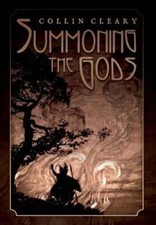
Summoning the Gods: Essays on Paganism in a God-Forsaken World is one of Collin Cleary’s most thought-provoking and controversial works. First published in 2011, the book explores the possibility of reviving pagan spirituality in the modern world and challenges many assumptions of contemporary secular culture. Cleary argues that the gods of ancient Europe have not disappeared; rather, modern humanity has lost the capacity to experience and understand them.
The book is a collection of essays that blend philosophy, religion, mythology, and cultural criticism. Cleary writes with intellectual rigor and draws upon a wide range of sources, including classical mythology, German idealism, phenomenology, and traditionalist thought. His central thesis is that modern rationalism and materialism have alienated people from a deeper, sacred relationship with the world. Instead of treating the gods as symbols or psychological archetypes, Cleary encourages readers to consider them as genuine realities that can once again become meaningful in human life.
One of the book’s greatest strengths is its originality. Cleary does not merely advocate a nostalgic return to ancient religions; he confronts the difficult question of how authentic pagan belief can exist in a modern context. His essays are engaging, intellectually ambitious, and often provocative. Readers interested in philosophy of religion, mythology, or contemporary pagan movements will find much to ponder.
However, the book is not without weaknesses. Cleary’s writing can be dense and highly theoretical, making some chapters challenging for general readers. His critique of modernity occasionally appears one-sided, and those who do not share his philosophical assumptions may find his arguments unconvincing. Furthermore, the book raises important questions about cultural identity and tradition without always providing clear practical answers.
Overall, Summoning the Gods is a fascinating and ambitious work that offers a distinctive perspective on spirituality in the modern age. Whether one agrees with Cleary’s conclusions or not, the book succeeds in stimulating reflection on the relationship between myth, culture, and the sacred. It is a rewarding read for serious students of religion, philosophy, and pagan thought.