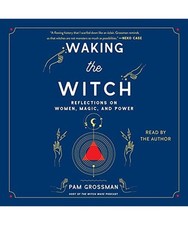
Waking the Witch: Reflections on Women, Magic, and Power is Pam Grossman’s essay collection that explores the cultural history of witches, the symbolism of magic, and the shifting relationship between femininity and power. Blending memoir, cultural criticism, folklore, and feminist theory, the book examines how the figure of the witch operates both as a historical construct and a modern metaphor. Grossman positions witchcraft not only as a spiritual practice but also as a lens through which societies interpret female autonomy, rebellion, and creativity. Her writing is accessible yet intellectually grounded, making the work appealing to readers interested in feminist thought, mythology, and cultural studies.
One of the strongest aspects of the book is its interdisciplinary approach. Grossman draws connections between historical witch trials, literary representations, film, art, and contemporary feminist movements, showing how the image of the witch persists across time and media. She argues that witches often symbolize women who resist social norms or embody forms of knowledge that traditional power structures attempt to suppress. The inclusion of personal reflections adds depth, as Grossman occasionally situates her own identity as a practicing witch within broader cultural and theoretical discussions. This combination of personal narrative and cultural analysis helps make abstract ideas more relatable and engaging. Her prose is clear, thoughtful, and often evocative, allowing complex ideas about myth and gender to remain approachable.
However, the book is not without limitations. Its essay format sometimes leads to repetition, with similar themes—such as empowerment, marginalization, and symbolic resistance—reappearing across multiple chapters without substantial new development. Readers seeking a tightly structured academic argument may find the pacing uneven. At times, the blending of personal experience with critical analysis can also interrupt the argumentative flow, making certain sections feel more reflective than analytical. Despite this, the thematic cohesion of the work remains strong, and its central ideas continue to resonate even when individual essays overlap in focus.
Overall, the book is a compelling exploration of how the witch functions as a cultural symbol of power, fear, and transformation. It encourages readers to reconsider assumptions about femininity, authority, and deviance through a rich mixture of history and myth. While structurally uneven, it succeeds in offering a meaningful meditation on how archetypes shape cultural understanding. Grossman ultimately invites readers to see the witch not as a marginal figure, but as a central one in the ongoing story of gender and power.