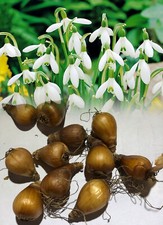
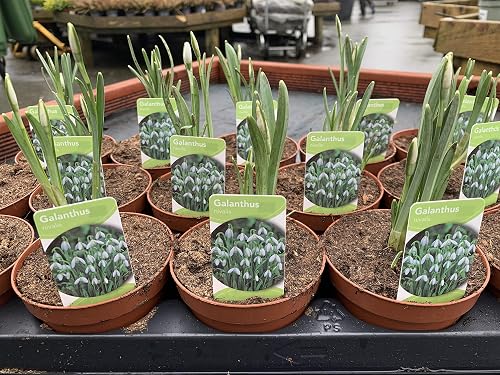
The snowdrop, known botanically as Galanthus nivalis, is a perennial herbaceous plant belonging to the Amaryllidaceae family. It is easily recognized by its slender, linear leaves and its distinctive, nodding white flowers, which consist of three larger outer tepals and three smaller inner segments, often marked with a green spot.
Snowdrops typically grow from small, underground bulbs and reach a height of 7 to 15 centimeters. They thrive in moist, well-drained soils and are commonly found in woodlands, meadows, and along riverbanks throughout Europe and parts of western Asia.
The blooming season for snowdrops is notably early; they are among the first flowers to appear at the end of winter, often pushing through snow and frozen ground from January to March. This early emergence makes them a powerful symbol of hope and the coming of spring.
Culturally, snowdrops have been associated with purity, renewal, and consolation. In Victorian England, they were often planted in churchyards and gardens as emblems of hope and remembrance.
In folklore, snowdrops are believed to possess potent magical properties. Traditionally, they are used in protection spells—fresh or dried snowdrop flowers are placed in sachets or amulets and carried to ward off negative influences and shield the bearer from harm. Practitioners often incorporate snowdrops into purification rituals, laying the flowers on altars or scattering their petals around the home to cleanse spaces of lingering negativity and invite fresh, positive energy.
Snowdrops are also woven into charms and home blessings. A small bundle of snowdrops tied with white thread may be hung above doorways to protect the household, or placed beneath pillows to encourage peaceful sleep and banish nightmares. In some magical traditions, snowdrop bulbs are planted near the entrance of a home to create a barrier against ill fortune and to welcome the energies of renewal and hope.
Folklore surrounding the snowdrop is rich and varied. In some regions, it is believed that bringing the first snowdrop of the year into the home will bring good fortune and mark a fresh start. However, older superstitions warn that picking snowdrops and bringing them indoors may invite sorrow or bad luck, as the flowers were once associated with death and mourning, often found in graveyards and used in funeral rites. Despite these cautions, many modern practitioners embrace the snowdrop as a symbol of resilience and transformation, using it in spells and rituals to mark new beginnings and to honor the return of light after darkness.
Overall, the snowdrop remains a cherished harbinger of spring, celebrated for its delicate beauty and enduring symbolism in both cultural and magical traditions.