The Great Rite is a central and respected ritual in many witchcraft traditions. At its heart, the Great Rite represents the sacred union of the God and Goddess, symbolizing the balance between masculine and feminine energies. This union is seen as the source of all creation, reflecting the cycles of life, death, and rebirth that are important in many pagan beliefs.
The roots of the Great Rite go back to ancient fertility and agricultural ceremonies. In those times, people honored the union of deities to encourage the land’s fertility and the community’s well-being. Today, the ritual has developed into both symbolic and literal forms, each carrying deep spiritual meaning.
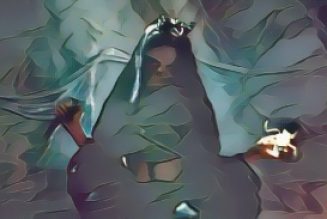
There are two main ways the Great Rite is performed. The most common is the symbolic Great Rite. In this version, ritual tools stand in for the God and Goddess. The cauldron or chalice, usually held by the High Priestess, represents the womb or feminine aspect. The athame, a ritual dagger held by the High Priest, stands for the masculine principle. During the ritual, the High Priestess may kneel at the altar with the cauldron, while the High Priest stands with the athame. Together, they recite words that call on the energies of growth, renewal, and vitality.
The key moment in the symbolic rite is when the High Priest lowers the athame into the cauldron. This act represents the union of the divine forces. Often, this is accompanied by words about the Land of Youth, the Wine of Life, and the Cauldron of Cerridwen—a symbol of transformation in Celtic mythology. The High Priest may then lift the cauldron, marking the completion of the rite and celebrating the unity of the God and Goddess.
The Great Rite carries deep symbolic meaning. It celebrates balance, polarity, and the creative power found in the universe. By performing this ritual, practitioners honor the connection of all life and the cycles that shape existence. It also serves as a reminder of the sacredness of sexuality and the importance of harmony between masculine and feminine energies, both within ourselves and in the world.
After the Great Rite, it is important to close the ritual circle properly. This helps to ground the energies raised during the ceremony and returns the space to its normal state. Closing the circle marks the end of the ritual and gives participants time to reflect and carry its blessings into their daily lives.
Whether performed symbolically or literally, the Great Rite remains a powerful expression of the mysteries at the heart of witchcraft. It connects practitioners to ancient traditions, the rhythms of nature, and the ongoing cycle of creation and renewal.