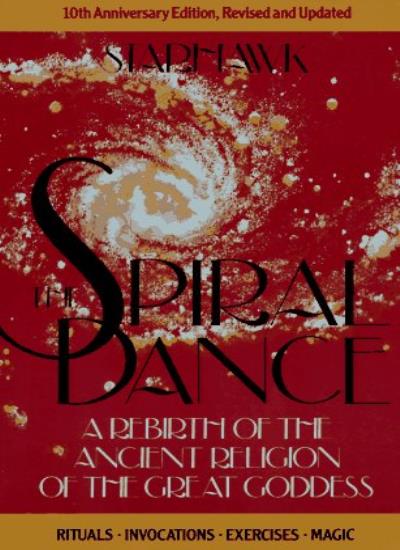
The Spiral Dance: A Rebirth of the Ancient Religion of the Great Goddess is a profound and influential exploration of modern Goddess-centered spirituality and the revival of ancient earth-based religious traditions. Written with poetic depth and spiritual insight, the book invites readers into a world where the divine feminine is honored as the source of creation, wisdom, transformation, and renewal. More than simply a study of ancient beliefs, the work serves as both a spiritual guide and a philosophical reflection on humanity’s relationship with nature, community, and the sacred cycles of life.
At the heart of the book is the idea that many ancient cultures once worshipped the Goddess as the embodiment of life itself. These traditions viewed nature as sacred and recognized the interconnectedness of all living things. The author traces the roots of contemporary Pagan and Wiccan practices back to these early spiritual systems, showing how symbols, myths, and rituals from the past continue to inspire modern seekers who long for a more personal and earth-centered spiritual path.
One of the most compelling aspects of the book is its detailed exploration of ritual and ceremony. The rituals described are not presented merely as religious acts, but as transformative experiences that connect individuals to the rhythms of the natural world. Practitioners gather in circles, symbolizing equality, unity, and the eternal cycle of existence. These sacred circles reflect ancient spiritual geometry and create spaces where participants can experience collective energy, reflection, and healing.
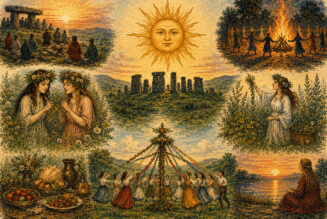
The ceremonies themselves often revolve around the cycles of nature—the changing seasons, the phases of the moon, and the continual movement of birth, growth, death, and rebirth. Seasonal festivals celebrate the turning points of the year, reminding practitioners of humanity’s deep bond with the earth. Moon rituals emphasize intuition, inner wisdom, and emotional transformation, while rites of passage acknowledge life’s transitions and personal evolution.
The book also highlights the symbolic tools used within these rituals. Candles represent illumination and spiritual awakening, herbs and incense evoke purification and healing, and crystals are believed to channel specific energies. Altars are carefully created using symbols of the four classical elements: earth, air, fire, and water. Together, these elements reinforce the belief that all aspects of the natural world are spiritually interconnected and alive with meaning.
Chants, songs, and invocations are another essential feature of the spiritual practices described in the book. Through rhythmic repetition and spoken intention, participants enter a state of heightened awareness and unity. These chants are not only acts of devotion to the Goddess but also methods of focusing energy and strengthening communal bonds. Invocations call upon the Goddess in her many forms—creator, protector, healer, and destroyer—allowing practitioners to connect with different dimensions of feminine divinity and personal empowerment.
A recurring theme throughout the book is the spiral as a sacred symbol of existence. Rather than viewing life as a straight line with a fixed beginning and end, the spiral represents continual movement, growth, and transformation. Life unfolds in cycles, constantly returning yet always evolving. This symbolism is reflected in the Goddess herself, who appears in many interconnected forms: maiden, mother, and crone; waxing, full, and waning moon; seed, flower, and harvest. Each aspect represents a stage of life, wisdom, and spiritual understanding.
What makes the book especially powerful is its emphasis on personal empowerment and healing. Spirituality is presented not as a rigid system of rules, but as a living and evolving practice that encourages self-discovery, creativity, and inner transformation. The Goddess tradition described in the book values balance, compassion, equality, and respect for nature, offering readers a spiritual path that feels both ancient and deeply relevant to modern life.
The writing itself is lyrical, meditative, and emotionally resonant. The author combines mythology, history, ritual instruction, and spiritual philosophy in a way that is both intellectually engaging and spiritually inspiring. Even readers unfamiliar with Pagan traditions may find the themes of connection, renewal, and reverence for nature deeply meaningful.
Ultimately, The Spiral Dance: A Rebirth of the Ancient Religion of the Great Goddess is far more than a book about religion or ritual. It is a celebration of the sacred feminine, the wisdom of ancient traditions, and the enduring human desire to reconnect with the natural world and with deeper dimensions of the self. Through its exploration of ritual, symbolism, and spiritual transformation, the book offers a path toward healing, empowerment, and renewed understanding of humanity’s place within the eternal dance of life.