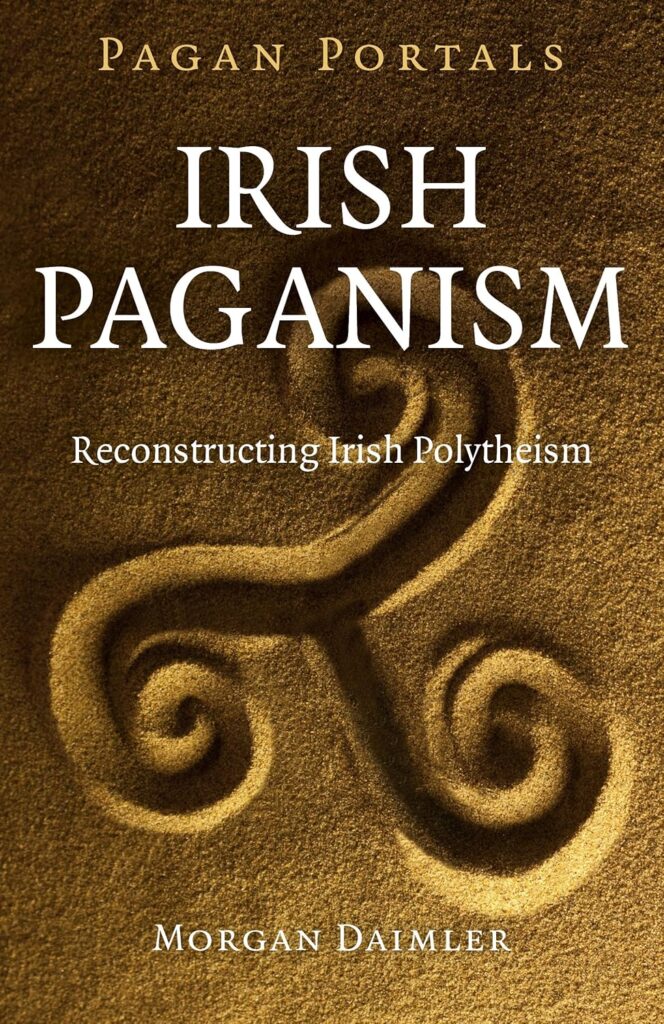
Today, we’re taking a deep dive into “Pagan Portals: Irish Paganism,” a book that sets out to introduce readers to the fascinating world of Irish Reconstructionist Polytheism. This slim volume promises to be a gateway for those curious about the spiritual traditions of pre-Christian Ireland. How well does it fulfill that promise? In this review, we’ll explore its strengths, its shortcomings, and what you can expect if you choose it as your guide on the path to Irish Paganism.
One of the book’s most impressive strengths is its unwavering commitment to grounding Irish Paganism in authentic historical sources and rigorous scholarly research. The author skillfully weaves together threads from Irish mythology, archaeological discoveries, folklore, and early medieval manuscripts, such as the Lebor Gabála Érenn and the Book of Invasions. This approach gives readers a sense of depth and legitimacy that is often missing from more eclectic or modern pagan guides. For example, when discussing the importance of sacred wells, the book references both archaeological evidence and living folk traditions, showing how these sites have been revered for centuries. The author doesn’t shy away from the complexities and ambiguities of the sources, either, acknowledging where the historical record is unclear or where modern interpretations diverge. This transparency is refreshing and helps readers develop a critical eye as they build their own practice.
The book truly shines in its explanation of the cosmology and worldview of pre-Christian Ireland. The interconnected realms of land, sea, and sky are described with clarity and reverence, painting a vivid picture of how the ancient Irish saw their world. The text explores the significance of sacred sites—rivers, wells, hills, and ancient trees—emphasizing how these places were not just backdrops, but living presences in the spiritual landscape. The reverence for the land is palpable, and the book encourages readers to cultivate their own relationships with local places of power, whether that’s a nearby river or a favorite grove of trees. If you’re seeking a resource that honors the complexity of Irish myth and the deep connection between people and place, this book stands out as a thoughtful and respectful choice.
However, the book is not without its weaknesses. While it provides a solid overview of the Irish pantheon—introducing gods and goddesses like the Tuatha Dé Danann, the Fomorians, and figures such as Brigid, Lugh, and the Morrigan—it sometimes falls into the trap of simply listing deities and summarizing their stories. There are moments where the text feels more like a catalog than a living tradition. For beginners, this can be a missed opportunity: the book rarely offers practical advice on how to build personal relationships with these deities, or how to incorporate them into daily spiritual practice. For instance, while the myths of Brigid are beautifully recounted, there are few concrete examples of how to honor her at home, such as crafting a Brigid’s cross or celebrating Imbolc with traditional offerings. Readers looking for hands-on guidance, sample prayers, or rituals may find themselves wishing for more detailed, step-by-step instructions or creative inspiration to help bridge the gap between ancient myth and modern life.
The writing style throughout is accessible and straightforward, making it easy for newcomers to follow along, even if they have little background in Irish history or mythology. The author avoids jargon and explains key concepts clearly, which is a boon for beginners. However, this clarity sometimes comes at the expense of narrative flair. Compared to more story-driven introductions to paganism, the prose can feel a bit dry or academic, especially in sections that summarize mythological cycles or genealogies. The book is at its best when it draws directly from mythological texts, quoting passages from the Táin Bó Cúailnge or the Mabinogi, and offering brief interpretations. Yet, there are missed opportunities to bring these stories to life with vivid storytelling, personal anecdotes, or imaginative retellings that might help readers connect emotionally with the material. A few more real-life examples—such as how a modern practitioner might experience the presence of the Morrigan during a storm, or how seasonal festivals are celebrated in contemporary Ireland—would have added warmth and immediacy to the text.
In terms of practical usefulness for beginners, “Pagan Portals: Irish Paganism” does offer a clear and logical structure for ritual and daily practice. The book outlines the basics of making offerings, composing prayers, and celebrating key holidays like Samhain, Imbolc, Beltane, and Lughnasadh. There are helpful suggestions for connecting with ancestors, honoring the spirits of place, and observing the cycles of the moon and sun. However, those hoping for detailed, step-by-step rituals, sample scripts, or creative exercises may need to look elsewhere or supplement with other resources. The book tends to provide frameworks rather than fully fleshed-out ceremonies, encouraging readers to adapt and personalize their practice. For example, it might suggest leaving offerings at a local well or lighting a candle at sunset, but it leaves the specifics up to the reader’s intuition and research. This open-ended approach can be empowering for some, but daunting for others who crave more guidance or inspiration.
Ultimately, “Pagan Portals: Irish Paganism” is best suited for readers who want a concise, historically-minded introduction to Irish Paganism, rather than a spellbook or a deeply personal memoir. It serves as a solid foundation for those who wish to engage thoughtfully with Irish culture, language, and landscape, and who are willing to do the additional work of crafting their own rituals and building their own relationships with the gods and spirits. The book invites practitioners to explore the Irish language, learn about traditional music and poetry, and seek out local sacred sites, but it leaves much of the experiential and creative work up to the reader. If you’re looking for a book that will hold your hand through every step of the journey, you may find it a bit sparse—but if you appreciate a resource that respects your autonomy and encourages independent exploration, you’ll find much to value here.
My recommendation? If you’re a beginner seeking a trustworthy, well-researched foundation in Irish Reconstructionist Polytheism, “Pagan Portals: Irish Paganism” is a valuable starting point. It will give you the historical context, the cosmological framework, and the inspiration to begin your journey. Just be prepared to do some additional reading—perhaps exploring more in-depth works on Irish mythology, folklore, and ritual—and to engage in a bit of soul-searching as you discover what Irish Paganism means to you personally. With curiosity, respect, and a willingness to learn, this book can be the first step on a lifelong path of magical connection to Ireland’s ancient wisdom.