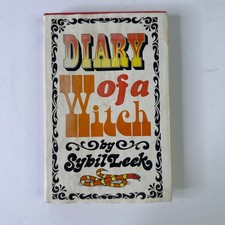
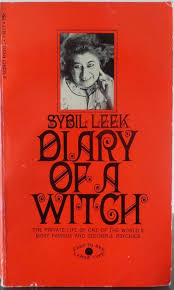
“Diary of a Witch” by Sybil Leek—a book that gives us a real, personal look at what it was like to be a modern witch in the twentieth century. Sybil’s story is more than just a memoir; it’s a window into a world where magic, tradition, and personal discovery are woven together in everyday life.
The story begins in Staffordshire, England, where three rivers meet in the countryside. This place, full of old stories and traditions, shaped Sybil’s early life and her connection to nature. For her, the rivers, forests, and hills weren’t just scenery—they were part of her journey and her growing sense of magic. She often describes wandering through the fields as a child, feeling the pulse of the land beneath her feet, and listening to the whispers of the wind in the trees. These moments, simple yet profound, became the foundation of her magical worldview.
Sybil’s family had deep roots in both witchcraft and rural English life. Some of her ancestors were known as “cunning folk” or wise women. They practiced folk magic, used herbs for healing, and followed the rhythms of farming life. Sybil shares stories about how her family’s magical practices sometimes mixed with local Christian traditions. These moments could be funny, tense, or confusing, but they show how her family kept their beliefs alive, even when others didn’t understand. For example, Sybil recalls her grandmother quietly blessing the fields with a handful of salt before planting, or her mother hiding protective charms in the corners of the house. These small acts of magic were woven into daily routines, passed down through generations as both necessity and heritage.
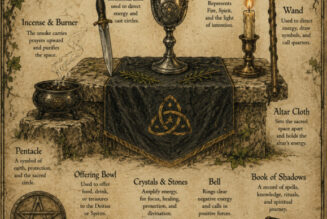
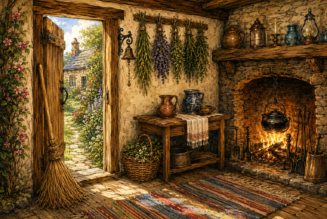
The Leek family’s home was filled with the scents of dried herbs, the flicker of candlelight, and the quiet hum of whispered spells. Sybil’s mother taught her how to identify healing plants, while her father shared stories of local legends and the old gods. Family gatherings often included storytelling sessions, where tales of faeries, spirits, and ancient rituals were shared by the fireside. These stories weren’t just entertainment—they were lessons, reminders of the unseen world that existed alongside the ordinary.
From a young age, Sybil was surrounded by the supernatural. She spent time living with Romani people, who taught her about divination, charms, and the power of storytelling. Her education was a mix of regular school and learning about herbs, astrology, and developing her psychic abilities. These early lessons inspired her to dedicate her life to witchcraft and to honor both her ancestors and the wider magical community. The Romani elders showed her how to read the future in the patterns of tea leaves and the lines of the palm, and Sybil often credits them with awakening her intuitive gifts. She remembers evenings spent around campfires, listening to songs and stories that carried the wisdom of centuries.
Living with the Romani also taught Sybil about resilience and adaptability. She saw how their traditions survived despite prejudice and misunderstanding, and she learned to value secrecy and discretion. The Romani’s respect for the land, their rituals of protection, and their deep sense of community left a lasting impression on Sybil. She often wrote about the importance of honoring one’s teachers and the responsibility that comes with magical knowledge.
As Sybil grew older, her magical education deepened. She sought out experienced witches and wise women, eager to learn the old ways. She describes her time learning from experienced witches, which eventually led to her initiation into a coven—a big milestone in traditional witchcraft. She explains the rituals, the importance of trust and support among witches, and the need for secrecy and discipline. Sybil’s initiation was both solemn and joyful, marked by candlelight, sacred oaths, and the sharing of ancient symbols. She writes about the nervous excitement she felt, the sense of belonging, and the realization that she was now part of a lineage stretching back through time.
The coven became a second family for Sybil. Together, they celebrated the cycles of the moon, honored the changing seasons, and supported each other through life’s challenges. She describes the feeling of standing in a circle, hands joined, voices rising in song—a sense of unity and purpose that transcended the ordinary. These rituals were not just about magic; they were about community, healing, and transformation.
Sybil also talks about the history of witch persecution, the impact of the witch trials, and how attitudes slowly changed over time. She reflects on the fear and suspicion that once surrounded witchcraft, and the courage it took for her and others to practice openly. Sybil shares stories of friends who faced discrimination, and of moments when she herself had to hide her beliefs. Yet, she also witnessed the gradual shift in public perception, as curiosity replaced fear and more people began to seek out the wisdom of the old ways.
As her story continues, she explores topics like reincarnation, her work with paranormal researcher Hans Holzer, and her experiences with the counterculture of the 1960s, including flower children and American fortune tellers. These stories show how witchcraft has changed and grown alongside society. Sybil’s travels took her from English villages to bustling American cities, where she met people from all walks of life—artists, musicians, seekers, and skeptics. She delighted in sharing her knowledge, but she also learned from others, embracing new ideas and adapting her practice to changing times.
Through her honest storytelling, Sybil Leek invites us into her world. She shares the traditions, challenges, and changes that shaped her path as a witch. Her memoir helps us understand how modern witchcraft has evolved, and why it still matters today. By connecting her personal story to history, Sybil shows that witchcraft is both a spiritual path and a living tradition—one that welcomes anyone who’s curious and open to learning.
Sybil’s journey is a reminder that magic is not just about spells and rituals—it’s about connection: to the land, to our ancestors, and to each other. Her life was filled with moments of wonder and struggle, laughter and loss, but through it all, she remained true to her calling. She encourages us to honor our own roots, to seek out teachers and community, and to trust in the wisdom that comes from experience.
In “Diary of a Witch,” Sybil Leek offers more than just a glimpse into her life—she offers guidance for anyone beginning their own magical journey. Her story is an invitation to explore, to question, and to celebrate the mysteries of the world around us. Whether you’re drawn to the old ways or simply curious about the path of the witch, Sybil’s words remind us that the journey is as important as the destination, and that magic is always within reach for those who seek it.


![BY SYBIL LEEK - DIARY OF A WITCH (1968-06-16) [HARDCOVER]](https://i.ebayimg.com/images/g/dPMAAeSwbKFqLFk5/s-l225.jpg)