The Green Man is a well-known figure in pagan mythology. He represents rebirth, renewal, and the lasting spirit of nature. Most often, he is shown as a horned man whose face appears from a mask of leaves—usually oak, but sometimes ivy, hawthorn, or other plants. This image is found in many cultures across Europe, from ancient Roman and Celtic traditions to medieval Christian architecture.
The Green Man is also called “Green Jack,” “Jack-in-the-Green,” or “Green George.” He stands for the spirits of trees, plants, and the energy of the natural world. People connect him with rain, the fertility of the land, and the growth of crops and livestock. His face is often carved into the stonework of medieval churches and cathedrals in Britain and Europe, peering out from doorways and columns. These carvings show how people respected nature’s cycles, even within Christian settings.
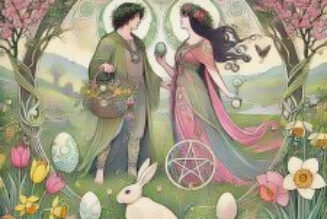
During spring, the Green Man—often called Green George at this time—is part of pagan festivals that celebrate the return of life after winter. In these events, a young man dressed in greenery leads processions. In some places, an effigy of Green George is placed in a river or pond to call for rain and keep the fields green. These customs are especially common in Eastern Europe, where the Green Man is linked to farming and the renewal of the seasons.
The Green Man also appears in folklore and fairy tales. As a woodland spirit, he is connected to fairies who live in forests. Green is the color most often linked to these magical beings. In some parts of the British Isles, fairies are called “Greenies” or “Greencoaties.” There is even a story about “The Green Children,” two mysterious children with green skin who said they came from a world underground. Stories like this show the Green Man as a link between humans and the magical side of nature.
Over time, the Green Man has appeared in art, literature, and seasonal celebrations. Today, he is still a strong symbol for those who honor nature’s cycles. He inspires modern pagan practices and ecological movements. The Green Man’s lasting presence in both old and new traditions highlights the deep connection people feel with the natural world and the hope for renewal each spring.