A curse is generally understood as a spell meant to bring misfortune, illness, harm, or even death to a person.
Curses are considered one of the most feared forms of magic, and they appear in many cultures around the world.
People may cast curses for reasons such as revenge, power, or protection—often to safeguard homes, valuables, or burial sites.
The effects of a curse can be immediate or may remain dormant for years before manifesting.
Some curses are believed to affect entire families, lasting for generations.
Anyone can attempt to lay a curse by wishing harm upon someone with strong intent.
However, the effectiveness of a curse is thought to depend on the status and condition of the person casting it.
Curses are often believed to be more powerful when cast by individuals in positions of authority, such as priests, priestesses, royalty, or those skilled in magic, like witches and sorcerers. They are also considered potent when cast by people who feel they have no other means of seeking justice.
Curses spoken on a deathbed are regarded as especially strong, as they are believed to carry all of the curser’s remaining energy.
If a person knows they have been cursed and believes in its power, this belief can make the curse more effective, as their own fear may contribute to the outcome.
Still, curses are said to work even if the victim is unaware of them.
Sometimes, victims are not told about a curse to prevent them from seeking help to remove it.
Witches and sorcerers may perform both blessings and curses, sometimes as a service for others or as part of judicial practices.
As noted by Plato in the Republic, some practitioners would, for a fee, use spells and curses to harm others, regardless of whether the target was considered good or bad.
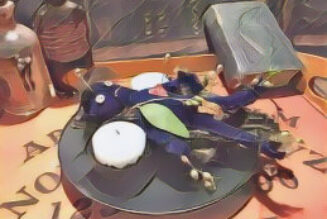
One of the most common methods of cursing involves creating a figure or effigy to represent the intended victim.
Wax effigies have been used in places such as ancient India, Persia, Egypt, Africa, and Europe, and are still used today.
Effigies can also be made from clay, wood, or cloth.
These figures are often marked or attached with something belonging to the victim, such as hair, nail clippings, or even dust from their footprints, and then melted or burned.
As the effigy is destroyed, it is believed the victim suffers, and may die when the figure is completely gone.
In ancient Egypt, wax figures of Apep, a mythological enemy, were used in rituals. The magician would write the name on the effigy, wrap it, burn it, and then dispose of the ashes in a specific way.
Wax figures were also left in tombs as part of protective or harmful spells.
During the witch hunts, many were accused of using wax images to cause illness or death.
King James I of England described in his book, Daemonologie, how witches were believed to cause harm by roasting wax or clay images.
The belief was that as the image melted or dried, the person it represented would become ill or waste away.
Instead of melting, some traditions involve sticking effigies with pins, thorns, or knives. Sometimes, animal or human hearts are used as substitutes.
Objects that decompose quickly, such as eggs or animal remains, may be buried with spells so that the victim’s health declines as the object deteriorates.
In Ireland, “cursing stones” are used by stroking and turning them to the left while reciting a curse.
Some believe that gems and crystals can hold curses. For example, the Hope Diamond is thought to be cursed because many of its owners have experienced misfortune.
Many witches believe that a curse will eventually return to the person who cast it in some form.
However, some consider cursing justified in certain situations, such as using binding spells to prevent violence.
In some cultures, curses are seen as a legitimate response to wrongdoing.
There are also various ways believed to repel or break curses. Amulets made with specific formulas, or the use of dragon’s blood in protective herbal mixtures, are common examples.
A cloth poppet filled with nettles, inscribed with the curser’s name if known, and then buried or burned, is thought to break a curse.
Sprinkling nettles around a room is also believed to offer protection.
Oils such as rosemary, van-van, and certain Vodun blends may be used in baths or as anointing oils for protection.
Burning a purple candle while reciting a spell is another method used to counter curses.
In some traditions, curses are sent back to their originators, a practice sometimes called “turning the curse upstream.”
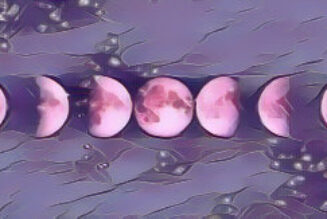
Traditionally, certain times are considered more favorable for both casting and breaking curses, though these times may vary by culture and tradition.ring the waning moon.