Banishing Techniques.
A Comprehensive Guide for Beginners.
Banishing is an important practice in witchcraft, used to clear away unwanted energies, influences, or even spirits from your environment or your life. Traditionally, banishing rituals are considered most effective during the waning or new moon, which are times associated with release and letting go. Performing banishing at these times can help align your intentions with natural cycles and may enhance your results.
In this guide, you will find an overview of essential tools and techniques for banishing, their historical backgrounds, and practical tips for safe and effective use.
Athame.
The athame is a ritual knife with a black handle and double-edged blade, commonly found in ceremonial magic and Wiccan traditions. It is not used for physical cutting. Instead, the athame serves as a symbol for directing energy, inviting positive forces, and creating protective boundaries. During banishing, you can use the athame to trace protective symbols in the air or to symbolically cut away negativity. It is important to treat your athame with care—store it safely and cleanse it regularly to keep its energy clear.
Broomstick.
The broomstick, also called a besom, is a traditional tool for spiritual cleansing. Before starting any ritual, you might sweep your space with intention, imagining the broom removing stagnant or negative energy. In folklore, besoms were often hung above doorways for protection. For best results, consider dedicating a broom solely for magical use and avoid using it for regular cleaning.
Candles.
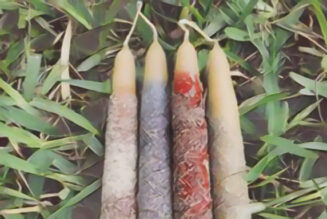
Black candles are often used in banishing magic because black is believed to absorb and neutralize negativity. You can light a black candle while focusing on what you wish to release. Allow the candle to burn down safely, and never leave it unattended. When finished, dispose of the wax respectfully, such as by burying it away from your home.
Cords.
Cords are used in binding rituals to limit harmful influences or behaviors. For example, you might tie a cord while reciting a chant to help bind a bad habit or prevent a negative person from affecting you. When the binding is no longer needed, it is common to untie or burn the cord to release it.
Gobi Dirt.
Graveyard soil, sometimes called Gobi dirt, is a powerful tool for banishing and protection. You can sprinkle a small amount on the floor and sweep it up to symbolically remove unwanted energies. If you collect graveyard dirt, it is respectful to ask permission and leave an offering for the spirits of the land.
Incense.
Burning incense such as sage, frankincense, or myrrh is a common way to purify the air and create a sacred atmosphere. You can walk through your space, wafting the smoke into corners and doorways. Always be mindful of fire safety and make sure the area is well-ventilated.
Mirror of Hathor.
The Mirror of Hathor is an ancient Egyptian tool with one scoured side and one clear side. You can gaze into the clear side to focus your intent, while the scoured side is thought to reflect negativity away. If you do not have a traditional mirror, a double-sided makeup mirror can be used. Remember to cleanse your mirror after each use to prevent lingering energies.
Scrying Mirror.
A scrying mirror, often blackened with paint or made from obsidian, is used for both divination and banishing. By gazing into the dark surface, you may receive messages or reflect negative energy away. Practicing regularly can help strengthen your intuition. It is a good idea to keep your mirror covered when not in use.
Sistrum.
The sistrum is an Egyptian rattle that was historically used in temple rituals to dispel negative energy. You can walk through each room, shaking the sistrum to break up stagnant energy. If you do not have a sistrum, any rattle or bell can be used for a similar effect.
Salt.
Salt has long been used as a protective barrier. You might sprinkle it around doorways, windows, or create a circle for ritual work. Salt is believed to absorb negativity, but it is important to sweep it up and dispose of it outside after your ritual.
Saltwater.
Mixing salt and water creates a strong cleansing solution. You can sprinkle it around your space or use it to asperge—flicking droplets with a branch or your fingers. Saltwater is especially helpful for cleansing after arguments or illness.
Spells.
Banishing spells can be traditional, such as those from Romany folklore or popular culture, or you can write your own. A simple rhyme of four lines is often enough. For example: “By candle’s flame and salt so pure, negativity leave, return no more.” It is helpful to state your intention clearly and end with words of closure, such as “So mote it be.”
Wand.
The wand is a classic tool for directing magical energy. You can use it to “zap” or push away negativity by tracing symbols in the air or pointing toward exits. Choose a wand that feels right for you—whether it is made of wood, crystal, or metal—and cleanse it regularly.
Water.
Water is a universal cleanser, both physically and spiritually. If possible, use spring or well water, and sprinkle it around your space to break psychic links or wash away lingering energies. It is thoughtful to thank the water source for its help.
Xua.
Xua is a modern technique developed by Solara. It involves sweeping motions with your arms to push negative energy toward the nearest exit. Stand tall, breathe deeply, and visualize energy moving out of your space. This method is simple, requires no tools, and can be practiced anywhere.
Banishing is about empowerment and reclaiming your space. It is helpful to approach these practices with respect, clear intention, and gratitude. Over time, you may discover which tools and techniques work best for your personal path.