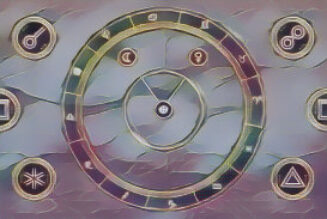
In many spiritual and esoteric traditions, the planets and prominent celestial bodies in our solar system are believed to be connected to what are known as the Seven Rays. The concept of the Seven Rays describes seven distinct streams of energy or influence, each carrying its own unique qualities, colors, and symbolic meanings. These Rays are thought to flow from the cosmos into the world, shaping both the natural environment and the inner lives of individuals.
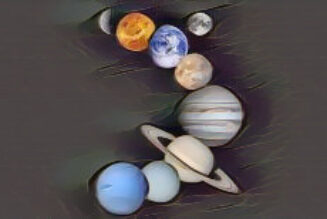
The Seven Rays are often associated with classical mythology, where each Ray is linked to a specific deity and a corresponding planet: Saturn, Jupiter, Mars, the Sun (also called Sol), Venus, Mercury, and the Moon (Luna). Each of these planetary bodies is seen as a channel for a particular type of energy, and their symbolism has been woven into spiritual practices for centuries.
For example, Saturn is traditionally connected to the principle of discipline, structure, and boundaries. In mythology, Saturn is often depicted as a wise but stern figure, representing the lessons of time, responsibility, and limitation. In practical terms, the influence of Saturn is invoked when one seeks to establish order, set long-term goals, or overcome obstacles through perseverance.
Jupiter, on the other hand, is associated with expansion, wisdom, and abundance. In ancient lore, Jupiter is the king of the gods, embodying generosity, optimism, and the pursuit of higher knowledge. The energy of Jupiter is often called upon for growth—whether that means personal development, spiritual insight, or material prosperity.
Mars is linked to action, courage, and assertiveness. As the god of war, Mars represents the drive to overcome challenges, assert one’s will, and pursue ambitions with determination. In magical or ritual contexts, Mars energy might be used to ignite motivation, break through stagnation, or protect oneself from harm.
The Sun, or Sol, stands for vitality, clarity, and illumination. It is the source of life and light, symbolizing the conscious self, creativity, and the power to manifest one’s intentions. Solar energy is often invoked for healing, confidence, and bringing hidden truths into the open.
Venus is connected to harmony, attraction, and the principle of love in all its forms. In mythology, Venus is the goddess of beauty and desire, and her influence is sought in matters of relationships, artistic expression, and the cultivation of inner and outer balance.
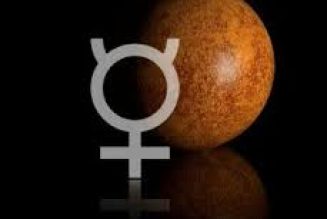
Mercury represents communication, intellect, and adaptability. As the messenger of the gods, Mercury governs thought, language, and the exchange of ideas. This energy is especially relevant for learning, negotiation, and any work that requires mental agility or quick thinking.
Finally, the Moon, or Luna, is tied to intuition, emotional cycles, and the mysteries of the subconscious. The Moon’s phases are seen as a reflection of the rhythms of nature and the ebb and flow of human feelings. Lunar energy is often used for introspection, dreamwork, and connecting with one’s deeper instincts.
The visible planets and luminaries in the sky are regarded as physical manifestations of these deeper, archetypal forces. Their movements and positions are believed to transmit these energies to Earth, subtly influencing both the natural world and human experience. This framework forms a foundation for many esoteric, magical, and spiritual practices, which seek to understand, harmonize with, and consciously work with these planetary forces as part of a broader vision of the interconnected universe.