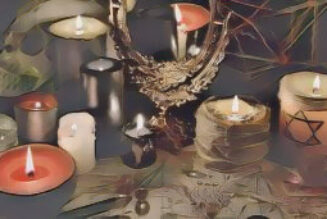
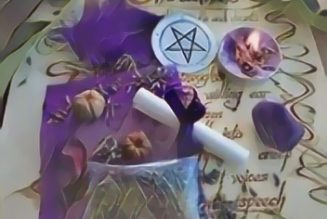
Setting up your altar is an important and personal part of starting your witchcraft journey. An altar is a special place where you focus your spiritual work and rituals. To create your altar, you will need a few basic items, each with its own meaning and use.
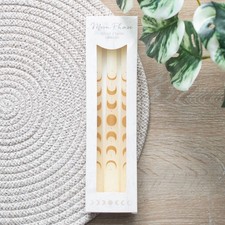
Begin with candles. Traditionally, two candles are placed on the altar, each in its own holder. One candle often represents the female principle, or the Goddess, and the other stands for the male principle, or the God. You can use white candles for purity, or choose colors that match your ritual—such as green for prosperity, red for passion, or blue for healing. Lighting the candles signals the start of your ritual and invites spiritual energy.
Next, add an incense holder and incense. Incense can be sticks, cones, or loose herbs. Choose incense for its magical qualities. For example, frankincense is used for purification, and lavender brings peace. The smoke is believed to carry your prayers and intentions, and it also cleanses the space.
Place a symbol of the deity or deities you honor on your altar. This could be a statue, a figurine, or a meaningful object. For example, a statue of Kuan Yin, the Chinese Goddess of Compassion, or items like seashells, bowls, or stones that represent the divine feminine. Choose what feels right for your beliefs.
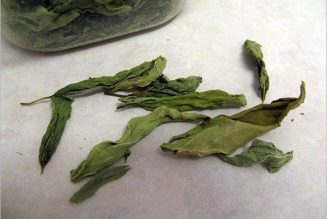
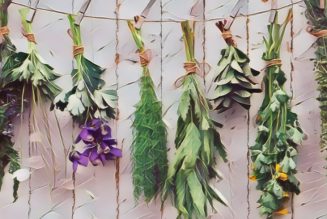
A small vase with fresh flowers or herbs brings natural energy to your altar. Flowers like heather, lavender, or roses each have their own magical uses—heather for protection, lavender for calm, and roses for love. You can also use herbs to honor the seasons or support your intentions.
Other common altar tools include the athame, a ritual knife with a black handle, used to direct energy and mark sacred space. The athame is not for everyday tasks, but for ritual use only. The boline, a white-handled knife, is used for cutting herbs, cords, or branches during rituals.
A burin, or inscribing tool, is used to carve symbols, runes, or words onto candles, talismans, or other magical items. This gives the item a specific purpose and energy.
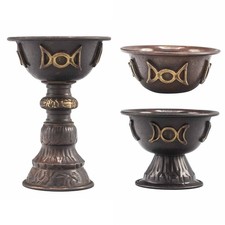
You may also want a small bowl or cauldron made of earthenware or ceramic. This can be used for mixing ingredients, burning offerings, or holding ritual water. The cauldron is a symbol of transformation and new beginnings.
Place a bowl of water on your altar to represent the element of Water, which is linked to emotions and purification. A bowl of salt or sand stands for the element of Earth, bringing grounding and stability to your ritual.
Use a special cloth or a pentacle—a disc with a five-pointed star—as a base for your altar tools. The pentacle is a symbol of protection and the unity of the elements.
Some people add bells to their altar. Bells can be rung to call the Elements or to mark different parts of the ritual. You can also add more candles in colors that represent yourself or your specific magical work.
Crystals, amulets, and talismans are often included for their special energies. For example, amethyst for psychic protection, rose quartz for love, or obsidian for grounding. You may also add personal items, like a meaningful gift, to connect with its energy or honor your journey.
In the end, your altar should reflect your spiritual path and intentions. Choose each item carefully, thinking about its meaning and your connection to it. Your altar will grow and change as you learn and gain experience, becoming a true expression of your magical practice.