In Pagan witchcraft, an altar is a special space—often raised or set apart—where rituals, ceremonies, and offerings are made to deities, spirits, or the forces of nature. The altar acts as a central point for spiritual work, connecting the everyday world with the sacred, and honoring the divine.
The altar is closely linked to the Goddess and Mother Earth, who represent the cycles of birth, death, and rebirth. In many Pagan traditions, the altar symbolizes the womb of the Goddess, the source of creation and transformation.
Usually, the altar is placed inside a magic circle, which is created to form a protected and sacred space for rituals. The direction the altar faces can differ—some face east to welcome the rising sun, others face north to connect with the earth element. This choice depends on tradition, ritual purpose, or personal preference.
There are no strict rules for building an altar in the Craft. Altars can be permanent, set up in a dedicated space, or temporary, assembled just for a ceremony. The materials and design are flexible, allowing each practitioner to use what is available and meaningful to them.
Outdoors, natural features like flat rocks, tree stumps, or even the ground itself can serve as altars. These connect the practitioner directly to the land and local spirits. Indoors, a table, shelf, wooden box, or even a board on bricks can become an altar. What matters most is the intention and respect for the sacred space.
It is generally recommended to avoid using conductive metals like iron or steel for the altar, as these can disrupt the subtle energies of ritual tools, especially those made from the same metals. Instead, wood, stone, or other natural materials are preferred.
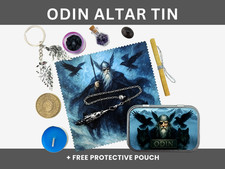
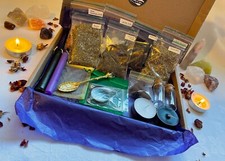
Many modern witches and covens practice in small spaces, such as homes or apartments. In these cases, the altar may be portable or collapsible, set up only when needed and stored away afterward. Some use trays, boxes, or window sills as makeshift altars.
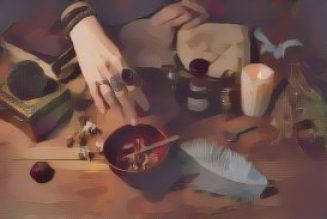
The items placed on a Pagan altar vary widely, depending on tradition, ritual, and personal belief. Common tools include the athame (a black-handled ritual knife), a white-handled knife for practical tasks, a sword, and a wand for directing energy.
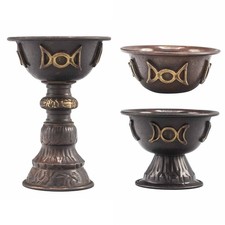
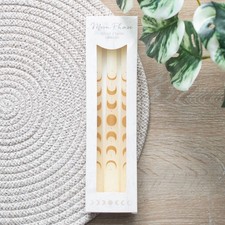
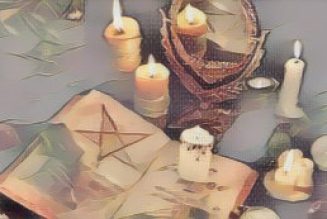
Candles are often used to represent fire and the divine presence. A chalice or goblet, usually filled with wine or water, stands for the element of water and the womb of the Goddess. Dishes of salt and water are used for purification and to represent earth and water.
Other items may include anointing oils, incense burners or censers for air and spirit, bells to mark transitions, scourges for symbolic purification, and dishes for offering food and drink to the deities. Images of deities—such as figurines, statues, or drawings—are often placed on the altar to focus devotion and intent.
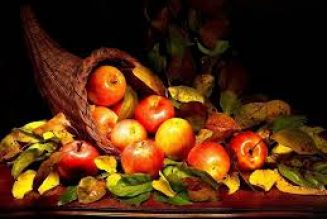
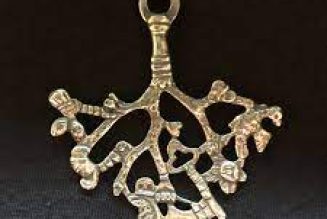
Additional objects might include a necklace with no beginning or end to symbolize eternity, crystals for energy work, seasonal flowers or herbs, and personal items of significance. The arrangement of these objects can be symbolic, with items placed to correspond to the four elements or directions.
If a broom (besom) and cauldron are needed for a ritual, they are traditionally placed on either side of the altar. The broom is used for spiritual cleansing, while the cauldron represents transformation and the mysteries of the Goddess.
In the end, the Pagan altar is a personal and evolving space. It reflects the practitioner’s path, intentions, and relationship with the divine. Whether simple or elaborate, indoors or outdoors, permanent or temporary, the altar is the heart of magical and spiritual practice in Pagan witchcraft.