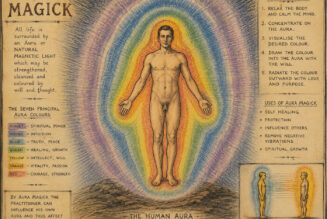
Throughout history, the image of witches flying has often been connected to the idea of the astral double. This concept suggests that people, sometimes influenced by certain substances, believed they could send their spirit or consciousness outside their physical body. Such beliefs are closely linked to old stories about both witches and werewolves, and can be traced back to the witch trials of Medieval and Early Modern Europe.
In the late Middle Ages and into the seventeenth century, northern Europe—especially places like Estonia, Livonia, and Finland—saw a series of witch trials that stood out for their association of witchcraft with lycanthropy, or the ability to turn into a wolf. During these trials, men and women were accused not only of practicing witchcraft, but also of transforming into wolves and carrying out violent acts in this form.
One well-known example is the case of Hans, a young man tried in Estonia in 1651. Hans said he became a werewolf after meeting a mysterious man dressed in black, who was often thought to represent the Devil. According to Hans, this encounter gave him the power to change into a wolf and wander the countryside. His story was similar to those told by others accused during this period.
The link between witches and werewolves was not unique to Estonia. Across northern Europe, court records show a repeating pattern: many believed witches could take on animal forms, especially that of a wolf, either to attend secret gatherings or to carry out supernatural attacks. These ideas were shaped by local legends, religious concerns, and the social changes happening at the time.
Witch trials in these areas often combined local pagan traditions with Christian beliefs about demons. Accusations frequently mentioned flying, changing into animals, and traveling at night—details that mixed shamanic practices with the growing stereotype of the witch. ( In the end, the persecution of supposed witches and werewolves reflected wider fears about the unknown, the limits of human nature, and threats to the social order.
Today, stories of flying witches and werewolves remind us how myths, fears, and cultural backgrounds can influence the way people understand the supernatural.