Throughout history, people have sought the guidance and favor of deities to empower their lives, seeking strength, inspiration, and the ability to overcome challenges. In many traditions, certain deities are especially revered for their association with power, success, energy, and personal growth. By understanding their stories and attributes, practitioners can form meaningful connections and invoke these deities in rituals or meditative practices to draw upon their unique qualities.
Let us explore several deities from different cultures who are often called upon for power, strength, and inspiration, and consider how their stories and symbolism can enrich your own spiritual journey.
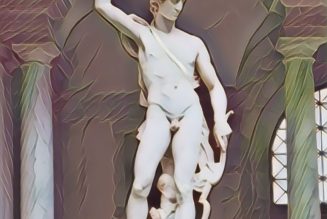
Apollo, the Greek Sun God, stands as a symbol of solar light, clarity, and creative force. He is the twin brother of Artemis, the Moon Goddess, and together they represent the balance of day and night. Apollo’s influence was believed to make the fruits of the Earth ripen, and in ancient times, the first crops were dedicated to him at sacred sites such as Delos and Delphi. These places were not only centers of worship but also of prophecy, as Apollo was renowned as the god of oracles and divination.
The myth of Apollo’s victory over Python, the great lightning serpent, is particularly significant. Python, the son-consort of the Mother Goddess in her form of Delphyne, represented the primal forces of creation and chaos. By overcoming Python, Apollo was seen as bringing order, light, and inspiration to the world. This myth also reflects the transition from older earth-centered worship to the solar cults of later Greece.
Apollo’s domains extend beyond prophecy. He is the patron of music, poetry, archery, healing, and the arts. His energy is strongly animus, embodying drive, ambition, and the pursuit of excellence. For those seeking to enhance their personal power, achieve success, or find inspiration in creative endeavors, Apollo can be invoked through rituals that honor the Sun, music, or acts of creation. While his energy is often considered more accessible to men, anyone can seek his guidance for clarity, ambition, and the courage to pursue their goals.
Aine, a prominent figure in Celtic mythology, is the daughter of Manannan, the Sea God and ruler of the Isle of Man. She is revered as a goddess of the cycles of the solar and lunar year, embodying the rhythms of nature and the turning of the seasons. Even into the twentieth century, her presence was celebrated on the Hill of Aine in Ireland, where torchlight processions and the burning of straw marked midsummer and the harvest festival of Lughnassadh.
Aine’s influence extends to love, fertility, and healing, making her a multifaceted goddess who nurtures both the land and the people. She is often called upon in rituals that seek to harmonize with the cycles of nature, encourage abundance, or foster healing and renewal. Invoking Aine can be especially meaningful during times of transition, such as the changing of seasons or the beginning of new ventures, as she embodies the promise of growth and the return of light.
Ama-terasu Omikami, the ancient Japanese Sun Goddess, is another powerful figure associated with light, vitality, and divine radiance. Her name means “Great August Spirit Shining in Heaven,” and she is also known as Shinmet, “Divine Radiance,” and O-hiru-me-no-muchi, “Great Female Possessor of Noon.” Ama-terasu is central to Shinto belief and is regarded as the ancestor of the Japanese imperial family.
Ama-terasu’s story is one of resilience and restoration. According to legend, she once withdrew into a cave, plunging the world into darkness, until the other gods lured her out, restoring light to the world. This myth highlights her role as a bringer of hope and renewal. She is especially honored in female-focused Sun rituals and ceremonial magick, where her energy can be invoked to inspire confidence, illuminate the path forward, and foster a sense of inner strength and dignity.
Helios, another Greek deity, is often identified with the Sun itself. To the Romans, he was known as Sol. Helios was imagined as driving a chariot drawn by winged, snow-white horses across the sky each day, bringing light to gods and mortals alike. In the evening, he was believed to descend into the ocean, completing the cycle of day and night.
The vivid descriptions of Helios in ancient poetry emphasize his radiant power and the life-giving force of the Sun. His presence is associated with vitality, health, and the renewal of energy. Invoking Helios can be particularly effective in rituals focused on physical well-being, personal empowerment, or the restoration of one’s life force. His energy is both invigorating and protective, offering a sense of clarity and purpose.
Horus, the ancient Egyptian Sky God, is depicted as a falcon or a falcon-headed man, with his eyes representing the Sun and the Moon. His wings were said to span the entire heavens, symbolizing his dominion over the sky. Horus is closely linked with the morning aspect of Ra, the Sun God, and was worshipped as Re-Harakhte. As the son of Isis and Osiris, Horus forms part of a divine trinity, often shown as an infant on his mother’s lap.
Horus is revered for bringing clarity of mind, purpose, and the ability to recognize and seize opportunities. He is also associated with uncovering secrets, dispelling deception, and seeing through illusion. In spiritual practice, invoking Horus can help sharpen intuition, enhance perception, and provide the courage to act decisively. His energy is especially valuable when seeking truth or navigating complex situations.
Lugh, known as the “shining one” in Celtic tradition, is celebrated as the youthful solar deity who presides over the festival of Lughnassadh, marking the first harvest. Lugh succeeded the Dagda, the father of the gods, as the supreme king of the Tuatha de Danaan, the ancient Irish deities. His story is one of versatility and mastery, as he was skilled in many arts and crafts.
According to legend, when Lugh sought entry to the court of Tara, he was told that every skill he offered—carpentry, smithing, poetry, warfare, history, heroism, and sorcery—was already represented among the gods. However, when he asked if any one god could perform all these tasks, he was admitted and eventually became their leader. Lugh’s story highlights the value of adaptability, innovation, and the integration of diverse talents.
Lugh can be invoked during Lughnassadh or at any time when you wish to reap the rewards of your efforts, embrace change, or cultivate originality. His energy supports those who seek to develop new skills, adapt to changing circumstances, or lead with creativity and vision.
By learning about these deities and their stories, you can draw inspiration for your own path. Whether through ritual, meditation, or simple reflection, invoking their qualities can help you access inner strength, clarity, and the power to shape your destiny. Each deity offers a unique perspective on power and transformation, inviting you to explore the many ways in which the divine can support your journey.