The astral plane is a complex topic, and many books have explored its details. In this brief overview, only the most essential points will be covered.
Many occult traditions describe the astral plane as having seven levels, or sub-planes. These levels are not about physical location, but rather different states of existence.
The higher levels of the astral plane are often described as places of great beauty, sometimes called the ‘Summerland’ by Spiritualists.
In contrast, the lower levels are thought to be darker, shaped by the negative energies of those who dwell there.
It is believed that the mind shapes its own environment, both in the physical world and even more so on the astral plane.
According to these ideas, like attracts like. After death, a soul is drawn to the region that matches its own nature.
These concepts are not new. They have roots in ancient cultures such as Greece and Egypt, and possibly even earlier.
Evidence suggests that even Neanderthal people buried their dead with objects, which may indicate a belief in life after death.
Alongside human souls, the astral plane is said to be home to many other kinds of spirits.
Some believe that animal souls also exist here. Certain animals are thought to have individual souls, while others are part of a group soul for their species.
There is also a wide variety of nature spirits, with some considered lower than humans and others higher.
Medieval occultists grouped these nature spirits by the elements they are connected to: earth spirits are called gnomes, water spirits are undines, air spirits are sylphs, and fire spirits are salamanders.
These elemental spirits are different from what are known as artificial elementals.
Artificial elementals are said to be created from astral energy by the power of human thought and desire.
These beings can take many forms—beautiful or frightening, helpful or harmful—depending on the thoughts that created them. Their existence lasts as long as the thought that sustains them.
Most people may not realize the influence their thoughts can have, but occultists aim to use this power intentionally, creating artificial elementals and thought-forms.
The creative power of thought is considered a basic principle of magic, recognized in many cultures throughout history.
In Eastern traditions, this is sometimes called Kriyashakti. Those with developed astral vision may perceive these artificial elementals and thought-forms.
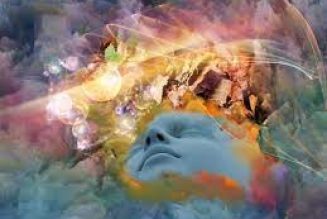
Such visions may also explain some of the unusual experiences reported by people who experiment with psychedelic substances.
Beyond the astral plane, there are believed to be even higher and more spiritual realms. Reaching these higher states is often seen as the goal for those who practice occultism and magic, allowing them to master the astral light rather than be influenced by it.