The Egyptian symbol of life, regeneration, the universe, and immortality—the ankh—holds a profound place in ancient and modern spiritual traditions. The word “ankh” means both “life” and “hand mirror,” and the symbol itself is a tau, or looped cross.
In ancient Egypt, the ankh was not only a hieroglyph for “life,” but also a powerful emblem carried by deities and pharaohs. Egyptian art frequently depicts gods and goddesses holding the ankh as a scepter, or extending it to the nostrils of the deceased, symbolizing the breath of life and the promise of resurrection.
The ankh’s form is rich in symbolism. The vertical staff is often interpreted as the male principle, while the closed loop represents the female principle, together signifying the union of opposites and the creation of life. Some scholars also see the loop as a representation of the rising sun, or as a key to the mysteries of existence.
Amulets in the shape of the ankh were crafted from faience, semiprecious and precious stones, wax, metal, and wood. These were worn for protection, health, and to invoke the favor of the gods. Tutankhamen, for example, possessed a hand mirror shaped like an ankh, reflecting its association with beauty and eternity.
The ankh’s influence extended beyond ancient Egypt. As Egyptians converted to Christianity from the first century onward, both the ankh and the Christian cross were used as sacred signs, blending old and new beliefs.
In ritual practice, the ankh was often placed on altars, incorporated into temple ceremonies, and used in funerary rites to ensure safe passage to the afterlife. Its presence in tombs and temples underscored its role as a bridge between the earthly and the divine.
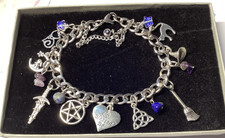
Over the centuries, the ankh has appeared in various cultures and spiritual movements. In modern times, it is embraced by Witches, Pagans, and practitioners of diverse paths as an amulet against negativity and as a talisman for good fortune and benevolent forces.
Today, the ankh continues to inspire. It is worn as jewelry, used in meditation, and featured in rituals to symbolize eternal life, spiritual awakening, and the interconnectedness of all things. Its enduring legacy reflects humanity’s ongoing search for meaning, transformation, and the mysteries of existence.