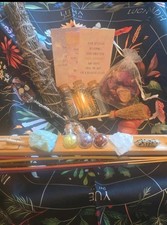
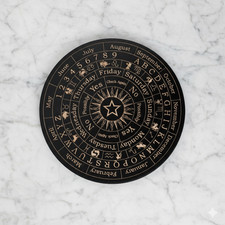
Various Witches’ Tools.
Every Witch may use different tools in their rituals and spellwork. Witchcraft is full of symbolism, and the tools chosen often reflect personal beliefs, cultural background, and tradition.
For example, some Witches use a sword instead of, or alongside, the ritual knife called the athame. The sword is a symbol of power and authority, and is linked to the element of Air or Fire, depending on the tradition. In ceremonial magic, the sword is used to cast circles, direct energy, or mark boundaries. In some covens, the High Priest or Priestess uses the sword during group rituals to show leadership and protection.
However, swords are often too large for indoor rituals and are harder to find than knives, so they are less common. For those practicing alone or with limited space, a small blade or even a symbolic item—like a wooden sword or a picture—can serve the same purpose.
A staff is another tool sometimes used in formal rituals, often held by the High Priest or Priestess. The staff, or stang, is a strong symbol in many traditions, representing the World Tree and the link between the earthly and spiritual worlds. In some forms of Traditional Witchcraft, the staff is forked at the top, reflecting ancient shamanic practices. Like the wand, it can represent Air or God, though sometimes it stands for Fire. Staffs are usually made of wood and may be decorated with magical symbols, stones, ribbons, or herbs for specific intentions.
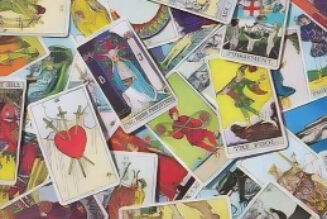
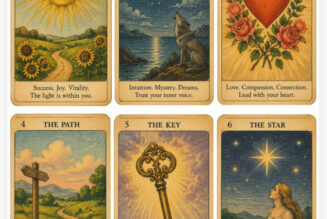
Many Witches also use divination tools in their rituals. These can include runes, tarot cards, a crystal ball for scrying, or other oracles from older traditions like the I-Ching. Each tool has its own history and method. For example, runes come from ancient Norse and Germanic cultures, while tarot cards began in Renaissance Italy and are now used for self-reflection and guidance.
Individual tarot cards or runes can be used in spells for specific goals. For example, the Strength card might be placed on an altar to bring courage, or the rune Fehu used in a prosperity spell. Some Witches make their own runes or paint tarot cards by hand, adding personal energy and meaning.
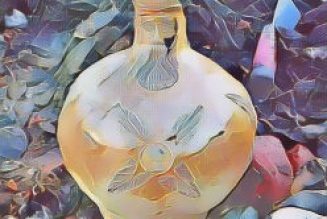
The crystal ball is often placed on the altar to represent the goddess, symbolizing clarity, intuition, and mystery. Scrying with a crystal ball or a bowl of water is a practice found in many cultures, from ancient Greece to modern Wicca, and is used to receive visions or messages from the spirit world.
Divination can happen during a formal ritual, but many Witches prefer to do it after the ritual, when they are still in a receptive state. Some traditions suggest writing down insights right after divination, while others encourage sharing and discussion in a group.
Many Witches also wear magically charged jewelry or special clothing during rituals. Jewelry can be a talisman, amulet, or simply a reminder of one’s spiritual path. For example, a silver pentacle necklace is a common symbol of protection and connection to the elements.
Some Witches wear just a pentacle on a chain, while others put on special robes or a gemstone headpiece to boost their energy during ritual. In some traditions, robe colors match the season or type of magic—white for purity, black for banishing, green for growth, and so on. Headpieces like circlets or crowns may honor the Goddess or God, or show the status of a coven leader.
There is no single correct way to use ritual and magical tools in Witchcraft. Throughout history, Witches have adapted their tools to fit their environment and resources. In medieval Europe, a cauldron might have been a simple cooking pot, while today it could be a decorative bowl or even a teacup used for scrying.
While it is helpful to use some of the tools described, what matters most is the Witch’s connection to them and how they fit into their personal practice. Some Witches prefer to make their own tools, such as gathering wood for a wand during a full moon or forging an athame by hand, believing this process gives the tool personal power.
Modern Witches often have some symbol of the Goddess and God at Sabbat celebrations and Esbats, but how this is done varies widely. Some use statues or candles to represent the deities, while others use natural objects like stones, flowers, or even a bowl of water and a candle.
Some Witches create elaborate rituals with many tools, while others keep things simple, using just a candle and a crystal. The key is intention and authenticity—using what feels right for the practitioner.
In short, it is more important to use what feels inspiring and meaningful, rather than following a checklist. The most powerful tool a Witch has is their own will and imagination; physical objects help focus and strengthen that energy.
If a tool feels out of place or uncomfortable, it may not be necessary for that Witch. Witches are encouraged to experiment and personalize their practice—perhaps using a family heirloom as a chalice, or substituting local herbs for traditional ones.
(pause) In the end, the tools of Witchcraft are as varied as the people who practice it. Whether you follow a set tradition or create your own path, let your intuition and creativity guide you in choosing, making, and using the tools that best support your magical journey.