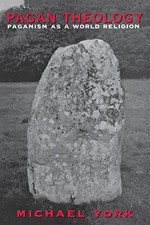
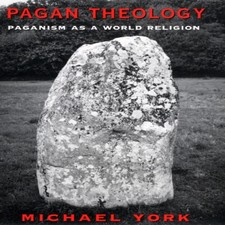
Michael York’s Pagan Theology: Paganism as a World Religion is an ambitious and thought-provoking study that challenges conventional understandings of religion and spirituality. In this work, York argues that paganism should not be viewed merely as a collection of revived ancient traditions or alternative spiritual practices, but rather as a legitimate and enduring world religion with deep historical and philosophical roots. His central claim is that paganism represents a universal religious orientation grounded in reverence for nature, plurality, and the sacredness of the material world.
One of the book’s greatest strengths is its breadth of scholarship. York draws from anthropology, comparative religion, mythology, sociology, and history to support his arguments. He explores pagan themes across cultures, from ancient Greece and Rome to indigenous traditions and modern neopagan movements. This comparative approach allows readers to see connections between diverse spiritual traditions that are often ignored in mainstream religious studies. York’s writing demonstrates impressive academic depth while remaining accessible enough for general readers interested in religion and spirituality.
Another notable aspect of the book is its challenge to the dominance of monotheistic frameworks in defining religion. York argues that paganism emphasizes diversity rather than exclusivity, coexistence rather than absolute truth claims. He presents pagan theology as inherently pluralistic, valuing the interconnectedness of humanity, nature, and the divine. This perspective feels particularly relevant in a modern world increasingly concerned with environmental issues and cultural diversity.
However, the book can sometimes feel overly theoretical and repetitive. York’s dense academic style may be difficult for readers unfamiliar with theological or sociological terminology. At times, his broad definition of paganism risks becoming too inclusive, potentially weakening the precision of his argument. Some critics may also question whether the various traditions he groups together truly form a unified “world religion.”
Despite these limitations, Pagan Theology remains an important contribution to the study of contemporary spirituality and comparative religion. It encourages readers to reconsider assumptions about what constitutes religion and offers a compelling defense of paganism’s philosophical and cultural significance. Overall, the book is insightful, intellectually stimulating, and highly valuable for students of religion, theology, and modern spiritual movements.